Farmer-led research to dig into perks of compost

The Editor
Growers and researchers have joined forces to add scientific rigour to the art of compost making in a bid to improve yields, soil, and plant health.
It is widely accepted that compost can help capture carbon, retain nutrients, and reduce the dependence on bought-in fertiliser by improving the soil structure and biology.
But this new Innovative Farmers field lab with Farm Net Zero will explore how compost quality can be influenced by a wide range of variables during the production process.
The farmer-led research will assess how compostable materials, compost management, and temperature levels affect the nutrient availability, pH, and levels of weeds and disease risk.
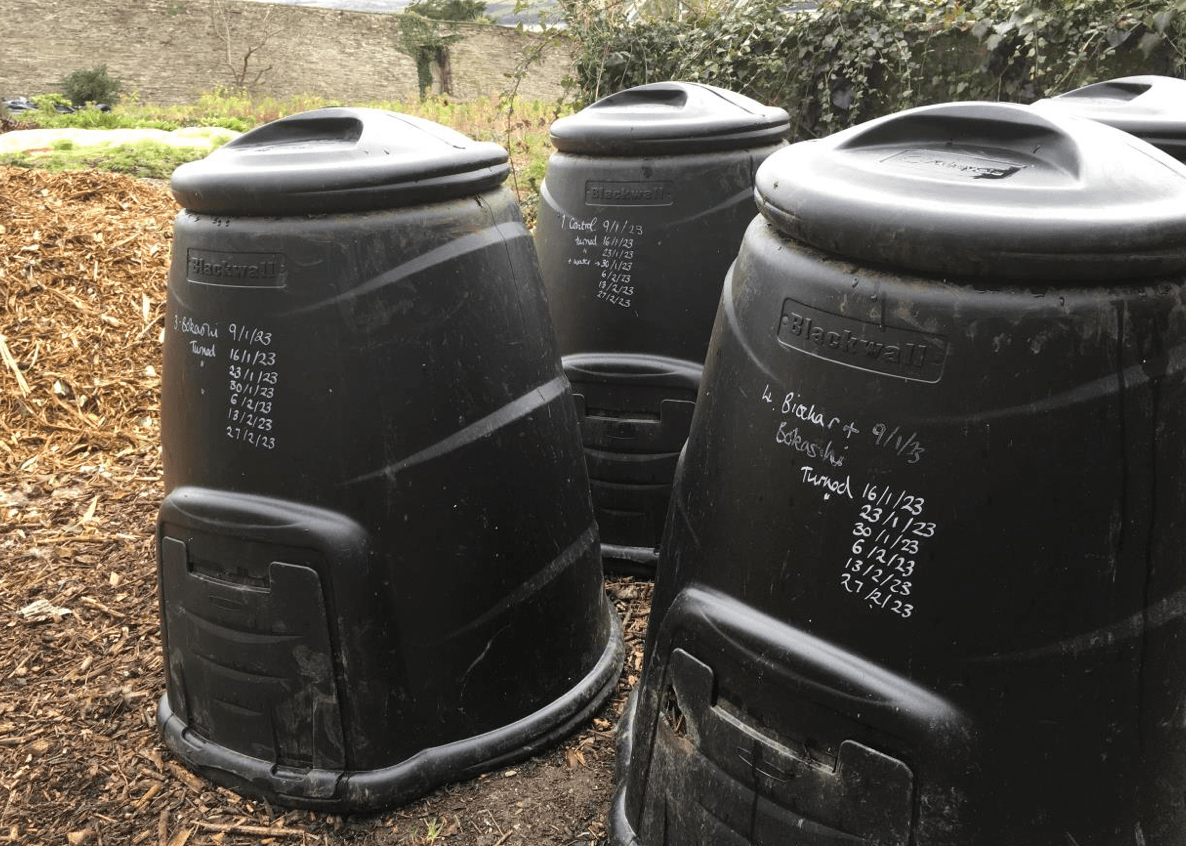
Growers will trial a range of compost management techniques including turning according to temperature rather than on a timed schedule, and adding biochar, bokashi, and bespoke microbial concoctions. All compost treatments will be replicated to deliver rigorous results.
Triallist Amelia Lake, co-founder of the Real Food Garden runs a two-acre market garden within a 10-acre holding that supports a farm shop, veg box scheme, and a small pig herd.
She said: “We see compost as playing a pivotal role – not just feeding the plants but feeding the soil and helping to capture carbon.
“For me, understanding and improving the value of the compost we have in the system is key. We hope to discover, in a more scientific way, what volumes can be used to achieve the best growth and crop quality.”
Researcher and adviser Dr Hannah Jones is supporting the group of farmers and growers who are centred around five growing sites.
They are looking for individual on-site knowledge on how best to produce a consistent, high-quality compost.
Dr Jones said: “We aim to investigate issues like, does each grower achieve the optimum temperature required to kill weeds and disease but at the same time optimising compost quality and the rate of production.”
The field lab is being organised by Innovative Farmers - a learning network managed by the Soil Association - and is the first of three trials within the Farm Net Zero project, funded by the National Lottery Community Fund.
Innovative Farmers advisor Jerry Alford, who is co-ordinating the trial, said: “This field lab is exactly what farmer-led research is all about – putting theories to the test in real farm situations. The findings these growers make will not only help them improve their own businesses, they will also provide far-reaching guidance for any farmer who wants to improve their soil health.”
Improving the value of compost
The Real Food Garden makes some of its own compost, which is supplemented by green waste from a nearby professional facility.
One of Amelia’s aims is to determine how to improve the green waste’s quality.
She will evaluate the contribution of an inoculant using wood that has been chipped on the farm alongside soil collected from beneath the farm’s hedgerows.
Theoretically this will introduce bacteria and fungi to accelerate decomposition and generate the all-important heat needed for compost making.
The wood and soil have good mycelial growth and, because they are sourced from the holding, the same biology profile as the soil where it will be used. This also limits the risk of introducing pathogens.
About 10 tonnes of compost has been made with half inoculated with the woodchip and the rest left untreated for comparison.
Spreading of the compost will begin in Spring and plant growth will be assessed along with a measure of nutrient density using a Brix meter.
Compost pathogen study
Another trial site is the Lost Gardens of Heligan near Mevagissey, which will host an additional compost pathogen study.
The 35-acre gardens lie within a wider 200-acre estate and include a three-acre walled heritage garden, producing fruit and veg mainly for a visitor restaurant.
Head gardener Nicola Bradley combines green waste from the garden and manure from the estate’s cattle and sheep with woodchip to make a sustainable and valuable compost.
But concerns over introducing pathogens like onion rot or blight to the veg garden mean it is only used for growing ornamentals.
To identify the risks, Nicola will look at turning compost and its effect on temperature levels and pathogen survivability.
She said: “This is a potentially valuable resource, and we would like to be able to use it on the productive garden too – but without the risk.
“We are hoping to establish how different turning procedures affect the temperature in the compost bays and how this then relates to the pathogen load.
“There is a fine balance required between oxygen levels, temperatures and pathogen control.”
Raising the temperature promotes the bacterial and mycelial growth needed to aid the composting process and kills off pathogens. But temperatures above 54°C will harm the good bacteria and degrade compost quality.
Under the trial, iButton technology – small, battery powered devices – will be distributed throughout the compost bay to continually log the temperature.
To assess the impact on pathogens, diseased plant matter will be collected from the gardens and distributed in small, fine-meshed nets, throughout the compost bays.
The bags will also contain dock seeds and bindweed propagules plus some metal nails to enable them to be recovered with a metal detector.
Nets will then be located at set points in the trial and then sent for analysis to assess how much of the disease and weeds remain viable.
Nicola added: “The exciting thing about the trial is that growers are introducing a science-led approach to the practicalities of the composting process.
“This should allow a much more precise approach that will allow us to make more of this vital resource that ultimately improves soil resilience and plant growth.”
To find out more and to follow the trial visit www.innovativefarmers.org, where anyone can join the network and access trial updates and findings for free.