Elisabeth Frink Natural Connection

The Editor
20 July 2024 – 23 February 2025
The Weston Gallery and Outdoors
Yorkshire Sculpture Park (YSP) presents work of Dame Elisabeth Frink (1930-1993) bequeathed to the arts charity, for the first time.
Gifted to YSP – a registered charity and accredited museum – the varied and timeless selection of works by the late renowned artist, famed for her sculptures and prints of animals and the human figure, celebrates her connection to the natural world.
Frink’s approach to animals and humans means that their complex and intertwined themes of vulnerability, nature connection, pain, joy and loss all endure – speaking to today’s audiences just as clearly as when she made them in the latter half of the 20th century.
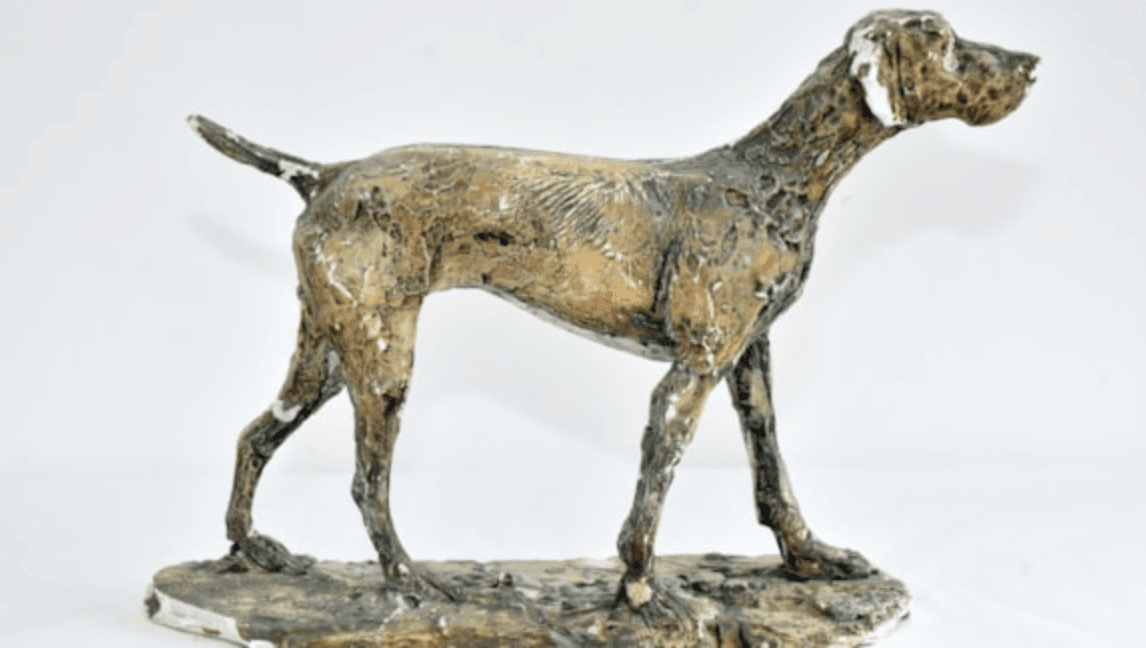
For Frink, animals symbolised powerful natural forces and showed both the struggles and celebration of life. The wildness, strangeness and freedom of birds was a notable fascination. Similarly, horses and dogs were enduring; particularly their nobility in labour. Her prints and sculptures resonate with the deep connection that she felt for the forms and personalities of animals.
The animal works displayed at The Weston Gallery show the dynamic way that Frink investigated shape and movement. Plaster models of some of the bronze works allow us to observe the artist’s process and create an immediate connection with her practice. The prints, too, have a direct connection to the artist’s thinking through vibrant mark-making. The transformation of one idea through plaster, bronze and paper shows how Frink’s thoughts could transfer through different ways of working.
A similar transformative energy is found in the artist’s Green Men – exploring the ancient mythological form in sculpture and print. The Green Man symbolises the power of nature and a deep and complex relationship to people. The understanding of natural forces through myth is also found in Frink’s prints illustrating Greek legends.
Frink’s human figures were rarely portraits, instead they represent meditations on the complexities of humanity itself: suffering and resilience, anger and defiance, the mechanical and the natural, and sometimes embodying a spirit of place. She often used plaster to build the form over a metal wire armature, which was then cast in bronze, a technique that means the artist’s touch is visible. The connection between material and process is highlighted in this exhibition with many plaster works on view.
Installed outdoors, several bronze sculptures explore humanity and its histories, habits and tragedies. Atlas (1983) is a towering mythological figure holding the weight of the earth above him and the Riace figures were inspired by the archaeological discovery of ancient Greek bronzes. Together, these and other figures reflect on the universality of the male form through history, representing power and vulnerability. This collection of works will be joining two life-sized bronzes, Protomartyr (1976) and Standing Man (1984–6), installed amongst the trees on the far side of the Park and are part of the collection of sculptures sited outdoors at YSP.
Frink had a longstanding relationship with YSP, which included her outdoor retrospective in 1983. A major exhibition had been in the planning when she passed away, resulting in a poignant memorial in 1993, and her work has regularly been shown nationally and internationally since.
Frink’s late son, Lin Jammet, arranged for 200 significant works to enter the YSP collection in 2020, comprising larger-than-life-size bronze figures, watercolours, domestic-scale bronzes and related plasters. The selection illustrates his mother’s deep understanding of different aspects of humanity in relation with animals – both wild and domesticated.
Alex Hodby, YSP’s Interim Head of Programmes: “Elisabeth Frink is such an important figure for YSP. She was a pioneer of form and purpose in sculpture and print, and her work has been part of the outdoor displays here for many years. In 2020 we were grateful recipients of a generous gift of bronzes, plasters and works on paper from her estate, which we care for and research.”
She added: “In Natural Connection, we focus on animals and mythological figures that capture the energy of life and landscapes. Now, as it was during her lifetime, Frink’s concern with animals, humanity and natural forces has a powerful resonance with contemporary life.”
All works provided to Yorkshire Sculpture Park in accordance with the wishes of the artist’s late son, Lin Jammet, 2020.